- Home
- wine blog
- food pairings
- Introduction to Wine and Food Pairing

Introduction to Wine and Food Pairing
Finding the right wines for the right foods can be a challenge. How are you supposed to know what will pair well without trying it first? By following these key principles to pairing food and wine, you’ll be able to find delicious combinations faster, while avoiding more unpleasant ones.
April 4, 2025
By Candice, Personal Wine Advisor

Key Concepts in Wine and Food Pairing
There are a few main elements to keep in mind as you start to come up with food and wine combinations.
Acidity
- What it is: A wine’s acidity is what makes it refreshing and keeps you reaching for another sip after every bite.
- The pairing rule: Your wine should have more acidity than the dish. If not, even the most flavor-packed wines will become muted and taste watered-down.
Body
- What it is: Body is a wine’s perceived lightness or heaviness, and generally corresponds to the percentage of alcohol, with lower-alcohol wines having less body and higher-alcohol wines having more.
- The pairing rule: You’ll want to match the body of the wine with the weight of the dish.
- For example, pair big reds like Cabernet or Malbec with hearty dishes, while delicate whites and lighter reds like Pinot Noir or Gamay (of Beaujolais fame) shine with lighter fare, vegetables and even fish. Pairing a lighter wine with a heavier dish (or vice versa) means that the dish (or the wine) will dominate, and the other will shrink, so the two will not complement each other successfully.

Character
- What it is: The character of wine is made up of its flavors and overall intensity.
- The pairing rule: Think about the kind of flavor combinations that work. You could contrast salty charcuterie with sweet wines like Port, or match the peppery, bacon-like qualities of Syrah with a peppercorn steak to boost the flavors.
Sweetness
- What it is: The sweetness of a wine is determined by the sugar level of the wine. (This is typically measured in grams per liter, and not to be confused with the perceived ripeness of the wine’s flavors).
- The pairing rule: Choose wines that are as sweet or sweeter than the dish. For example, a sweet treat like a fruit tart pairs well with a late-harvest Riesling or Sauternes, a dessert wine from Bordeaux, while a chocolate-based dessert is typically delicious with a fortified wine like Port.
A Deeper Dive on Wine Body and Structure
There are many different factors that go into determining the body of the wine. One element that’s often brought up is the tannin level. Tannins are natural compounds found in grape skins (and pips/seeds) that can be extracted during the winemaking process and remain present in the finished wine. While too much tannin can lead to astringent flavors and harsh textures, tannins can also provide a sense of grip or structure in the wine.
Higher alcohol levels can also affect the perception of body on the palate, since alcohol impacts the viscosity and texture of the wine. For example, Viognier is a white wine that has an oily texture and fuller body because of its naturally higher alcohol levels.
Based on these elements, the body of the wine is largely determined by the grape varieties’ natural qualities. Remembering that the wine’s body should match the dish’s heaviness, here are a few ideas to get you started.
- Pair light-bodied white wines (like Sauvignon Blanc) with goat cheese, fresh salads and grilled shrimp.
- Pair fuller-bodied white wines (like Viognier) with lobster, roasted chicken and creamy pasta.
- Pair light-bodied red wines (like Pinot Noir) with grilled salmon, roast duck and mushroom dishes.
- Pair medium-bodied red wines (like Grenache) with herb-roasted pork or grilled eggplant.
- Pair full-bodied red wines (like Cabernet Sauvignon) with steak, lamb and aged cheeses.
Types of Wine and Food Pairings
As you start trying different wines with the flavors of your dishes, it can be helpful to remember that there are a few different ways of pairing wine and food: Congruent, Complementary and Bridge pairings.
Congruent Pairings
Congruent pairings are combinations where the wines and foods share similar profiles.
Why they work: The similarity reinforces and amplifies the shared characteristic, making the experience of both elements more pronounced.
Balance is essential. If both the food and wine are too heavy, sweet or acidic, they can overwhelm the palate instead of creating harmony. Here are some congruent pairings we love:
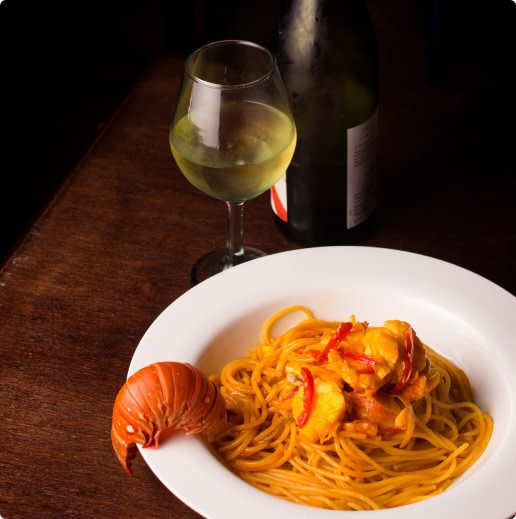
- Oaked Chardonnay (buttery and creamy) with Lobster Pasta: The creamy texture of the pasta mirrors the buttery richness of the Chardonnay, enhancing the dish’s indulgence while keeping the flavors smooth and harmonious.
- Syrah (peppery and smoky) with Grilled Peppercorn Steak: The smoky, peppery notes in Syrah match the charred, peppery flavors of a peppercorn steak, intensifying both elements for a bold, flavorful experience.
- Tawny Port (nutty with caramel and rich dried fruits) with Dark Chocolate: The nutty sweetness of Tawny Port enhances the deep, bittersweet cocoa notes in dark chocolate, creating a luxurious and balanced dessert pairing.
Complementary Pairings
Sometimes surprising yet complementary pairings bring together contrasting flavors that enhance and balance each other.
Why they work: The contrast highlights different aspects of both the food and wine, creating a more dynamic and well-rounded tasting experience. A well-executed complementary pairing allows acidity to “cut through” fat, sweetness to balance spice or fruitiness to contrast saltiness.
But be careful. Complementary pairings can be glorious when they play off each other, but they can also clash. Now, here are some complementary pairings we love:
- Sauvignon Blanc (zesty and acidic) with Goat Cheese Salad: The bright acidity of Sauvignon Blanc “cuts through” the richness of the goat cheese, while its citrus and herbal notes enhance the freshness of the greens and vinaigrette.
- Late-Harvest Riesling (sweet and fruity) with Spicy Thai Curry: The sweetness of a late-harvested Riesling balances the heat of Thai curry, while its high levels of acidity keep the pairing refreshing instead of cloying.
- Champagne (effervescent with citrusy, bready notes) with Fried Chicken: The crisp bubbles and high acidity of Champagne “cuts through” the richness of fried chicken, cleansing the palate and enhancing the dish’s crunchy texture.

Bridge Pairings
Bridge pairings connect food and wine by incorporating both complementary and congruent elements.
Why they work: Instead of relying solely on similarity or contrast, bridge pairings allow a shared characteristic to link the wine and food while another element creates contrast for balance. This approach makes pairings more versatile and nuanced.
When executed well, bridge pairings create a multi-dimensional experience—one element harmonizes while another provides contrast. The key is to identify a flavor or texture in both the wine and dish that ties them together while allowing another component to bring balance. Here are some bridge pairings we love:
- Pinot Noir (earthy and fruity) with Mushroom Risotto: The earthy notes in Pinot Noir complement the umami-rich mushrooms, while the wine’s bright acidity contrasts the creamy risotto, keeping the pairing balanced.
- Rosé (fruity and crisp) with Grilled Salmon: The red berry flavors of rosé complement the richness of the salmon, while its refreshing acidity cuts through the dish’s fattiness, creating harmony.
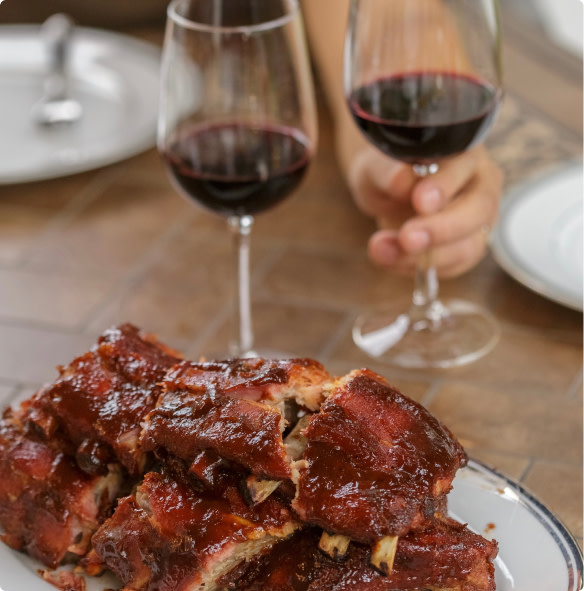
- Zinfandel (bold and jammy) with Barbecue Pork Ribs: The smoky-sweet barbecue sauce shares a fruity sweetness with Zinfandel, while the wine’s tannins and spice balance the dish’s richness, preventing it from feeling too heavy.
Wine Pairing Principles and Rules
- Acid Loves Acid
Wines that are high in acidity pair best with acidic foods. Without enough acidity, the wine can taste flat or dull. Acidic wines refresh the palate, making them ideal for tangy, citrusy dishes.
Example: Sauvignon Blanc with lemony seafood pasta. - Tannins Tame Fat
Wines high in tannin pair well with rich, fatty foods because the tannins “cut through” the fat, while cleansing the palate and enhancing the wine’s structure. Without enough fat, tannic wines can often taste astringent or harsh.
Example: Cabernet Sauvignon with a marbled ribeye steak. - Sweet Balances Heat
Slightly sweeter wines help to mellow the heat in spicy dishes. The residual sugar soothes the burn from chili peppers, while fruit-forward flavors enhance the dish’s complexity.
Example: Off-dry Gewürztraminer with Spicy Szechuan Noodles. - Salt Loves Bubbles
Salty foods pair beautifully with sparkling wines. The crisp acidity and effervescence of bubbles cleanses the palate, while the contrast between saltiness and fruitiness enhances both elements.
Example: Champagne with truffle fries. - What Grows Together, Goes Together.
You don’t have to stray far from the wine region to find the best pairings. After all, winemakers have been crafting their wines to complement their region’s local cuisine for centuries.
Example: Picpoul de Pinet is grown on France’s Mediterranean coast near the fishing port of Séte. The zippy, lemony white is a perfect partner for the fresh oysters that arrive at port daily.
Practical Wine Pairing Examples by Food Type
Looking for some practical guidelines on what to pair with some of the more common foods? Check out the quick reference guide below:
Cheese Pairings
- Cabernet Sauvignon with aged cheddar: The rich flavor and tannins balance the cheese’s sharp, nutty flavors.
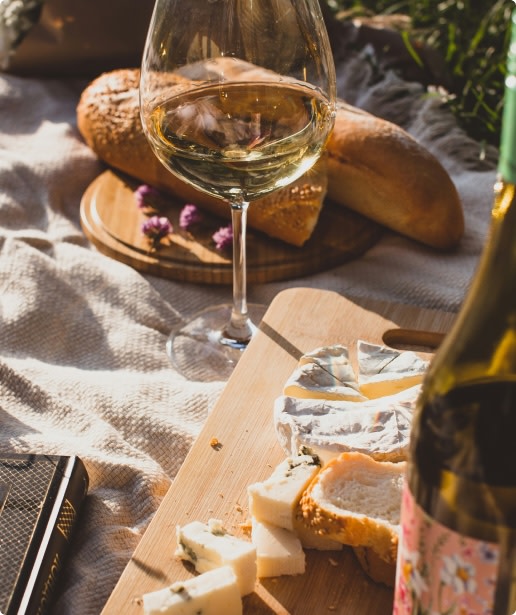
- Champagne with Camembert: The bubbles of Champagne cut through the creamy texture, and Camembert’s mild flavors balance the sparkling wine’s acidity.
- Chardonnay with Brie: A creamy, buttery barrel-aged Chardonnay matches the creaminess of the Brie, meanwhile enhancing vibrant, ripe fruit flavors in the wine.
Pasta Dishes
- Chianti with Spaghetti Bolognese: The wine’s bright acidity and cherry notes complement the richness of the meat and tomato sauce.
- Pinot Grigio with Garlic Butter Shrimp Pasta: The crisp acidity and citrus notes of Pinot Grigio enhance the freshness of the shrimp while balancing the richness of the garlic butter sauce.
- Barbera with Mushroom Truffle Pasta: Barbera’s high acidity and red fruit flavors contrast the umami of mushrooms and truffle, keeping the dish from feeling too heavy while enhancing its earthy flavors.
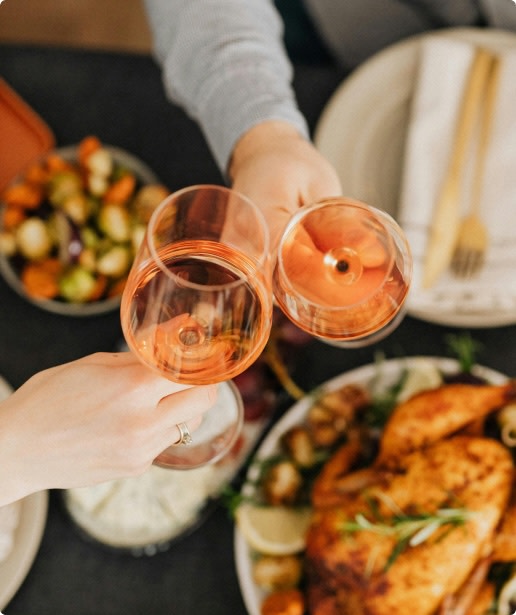
Holiday Dishes
- Zinfandel with Roast Beef & Cranberry Sauce: The jammy fruitiness of Zinfandel complements the tart cranberry sauce, while its spice and medium tannins balance the richness of the beef.
- Off-Dry Riesling with Honey-Glazed Ham: The wine’s slight sweetness enhances the caramelized glaze, while its acidity “cuts through” the saltiness of the ham for a refreshing balance.
- Pinot Noir with Herb-Roasted Turkey: Pinot Noir’s bright acidity and red fruit notes complement the turkey’s mild flavor, while its earthy undertones enhance classic herb seasonings like rosemary and sage.
Appetizers
- Albariño with Shrimp Ceviche: The white’s zesty citrus notes and crisp acidity enhance the fresh, tangy flavors of the ceviche while keeping the pairing light and refreshing.
- Prosecco with Prosciutto-Wrapped Melon: The bubbles and bright fruitiness of Prosecco contrast the salty, savory prosciutto while complementing the melon’s sweetness.
- Vermentino with Bruschetta: The fresh white offers mineral notes and aromatic herbs that harmonize well with the Mediterranean flavors of bruschetta.
American Favorites
- Malbec with Cheeseburger: Argentina’s classic red wine offers bold dark fruit flavors, smoky undertones and velvety tannins, which enhance the richness of the beef and cheese while complementing grilled or charred elements.
- Viognier with Mac & Cheese: The wine’s rich, velvety texture and stone fruit flavors enhance the creamy, buttery cheese sauce, while its subtle floral notes add depth to the pairing.
- Cabernet Franc with Pepperoni Pizza: The high acidity and bright red fruit flavors of Cabernet Franc balance the salty, spicy kick of the pepperoni while complementing the tangy tomato sauce.
Common Wine Pairing Mistakes to Avoid
There’s nothing worse than opening one of your favorite wines and having it fall flat or clash with your first bites of food. Avoid these seven deadly sins of wine and food pairings and you’ll keep your combinations tasty.
- Your dish had more acidity than the wine
No matter how delicious and fresh a wine is, it will taste flabby when paired with a dish with high acidity. That’s why red wines and even some white wines have a hard time matching zesty dishes with a lot of freshness and citrus.
Example: Most Viogniers will appear heavy and tasteless when paired with ceviche. - You mixed tannins with spice.
Wines that are high in tannins intensify spicy foods, making them taste even hotter and bitter. Go for a slightly sweet or low-tannin wine instead.
Example: Nebbiolo with spicy Szechuan beef. - You paired a dry wine with a sweet dish
A dry wine will taste bitter and sour compared to a sweet dessert. The wine should always be at least as sweet as the dish.
Example: Sauvignon Blanc with a sweet apple pie. - You let the umami flavors get out of hand
Umami-rich foods (like mushrooms or soy sauce) can make some wines taste harsh or metallic. Balance them with wines that have high acidity and fruitiness.
Example: Aglianico and Miso soup. - You forgot about the flavors of the sauce
It’s easy to say that a bold rich red goes well with red meat. That can be a totally different story if the dish is marinated or topped with a sweet or spicy sauce. Ideally, the wine has the complexity of flavor to match or complement both and enhance the entire meal.
Example: Light, earthy Pinot Noirs with baby-back ribs. - You didn’t consider the texture combinations
Wines with high acidity or bubbles can “cut through” rich, creamy foods, while full-bodied wines work best with hearty dishes. Matching or contrasting textures enhances the pairing experience. Sometimes, it does neither and the pairing falls flat.
Example: Nebbiolo with a heavy, cream-based pasta. - You paired a heavy wine with a delicate dish
A full-bodied wine can easily overpower a light dish, masking its flavors. Instead, match the intensity of the wine with the intensity of the food.
Example: Cabernet Sauvignon with a delicate poached fish.
Tips for Experimenting and Finding Pairings You Love
Don’t let these common mistakes stop you from experimenting. After all, wine is all about exploring and enjoying new things. The same holds true for pairing. There is no “right” or “wrong” when it comes to personal taste. So, go on, experiment and find the pairing combinations that please your palate most, using these tips as a guide.
Start With Simple Comparisons.
- What it means: Compare two wines with the same dish to understand how flavors interact.
- Example: Taste a Chardonnay and a Sauvignon Blanc with a roast chicken. Notice which pairing you prefer and why.
Try Similar, Swap Different.
- What it means: Start with a pairing you enjoy, then change either the wine or the dish.
- Example: If you like Pinot Noir with mushroom risotto, swap to a Merlot to see if a little more body and riper fruit flavors make it better or worse (or just different!).

Focus on Flavor Groups.
- What it means: Match wines to dominant flavors rather than ingredients.
- Example: Pair a spicy dish with a fruity wine (e.g. Zinfandel with BBQ ribs).
Play with Temperature and Glassware.
- What it means: Small serving changes can enhance flavors.
- Example: Chill a red wine slightly and see how it pairs differently with grilled meats.
Trust Your Own Palate Over Rules.
- What it means: Wine pairing is personal—if you enjoy it, it’s a good match.
- Example: Pair your favorite wine with comfort food and note what you enjoy about the experience.
Conclusion
You don’t have to complete a sommelier course to pair like a pro. With a good grasp on the major elements at play between wine and foods, you can discover new pairings and experiment with your own. Enjoy!

AUTHOR
CANDICE, PERSONAL WINE ADVISOR
I have over 10 years of experience in the wine and beverage industry, and have tasted some of the rarest and most sought-after wines. I'm your ideal oenophile today—pour me a Cru Beaujolais.
- WSET – Level 2 Wines & Spirits Certified
- CMS – Level 1 Sommelier Certificate
Favorite Wine: Barolo • Natural Wine • Austria/Germany • Island Wines
candice@wsjwine.com | (203) 523-2164