
- Home
- wine blog
- how to guides
- How to Choose the Best Dry White Wine for Cooking


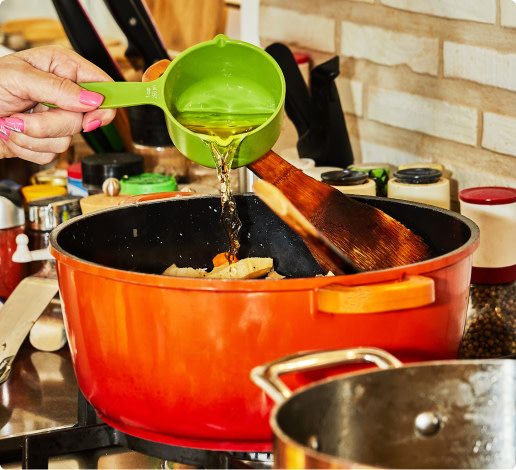
Why Should You Cook with Wine, Anyway?
As an ingredient, wine is a phenomenal flavor enhancer, releasing specific flavor compounds in a way that water or broth cannot, and adding depth and nuance. Wine’s natural acidity also makes it a great tenderizer, breaking down tough proteins and vegetable fibers, and ensuring your finished dish has a melt-in-your-mouth texture. And wine does all this while preventing your other ingredients from becoming dry and gristly.
Why is Dry White Wine Good for Cooking?
Because of its high acidity, dry white wine—i.e. white wine that is not sweet—is an especially good choice for cooking when you aren’t following a recipe that calls for a specific color, style or grape variety.
Like lemon or another citrus juice, it won’t just tenderize, it’ll also cut through excess fat and bring balance to richer dishes. In lighter preparations, meanwhile, dry white wine can accentuate, enrich and complement your ingredients, but with more flavor complexity than something like vinegar or tamarind.
That said, dry white wine is also great for cooking because its taste is more neutral than that of a sweet white wine, or a rosé or a red. When heated, a lot of a wine’s alcohol will burn off, and its acid and flavor will be elevated. Rather than muddy your ingredients or all-out dominate your palate, dry white wine will highlight and heighten your meal’s nuances.
How to Choose the Right Dry White Wine for Cooking
When it comes to cooking with wine (dry white or otherwise), the number one rule is not to cook with any wine you wouldn’t want to drink. Your dish is only as good as the ingredients you put into it, and cooking with bad wine certainly won’t improve it. And don’t forget, heat will bring a wine’s flavors front and center, so you’ll want to like them.
But you needn’t, and shouldn’t, spend a bundle on your cooking wine, either. In the same way that heat will quell much of your wine’s alcohol, heat will suppress the subtle nuances of a complex or long-aged bottling. So, maybe save that award-winning Sancerre for your next holiday party.
Best Dry White Wines for Cooking
For most dishes, a low-to-moderately priced Pinot Grigio/Pinot Gris or Sauvignon Blanc that you enjoy will do nicely. Both white wine varieties have a comparatively neutral palate as well as the zippy, medium-to-high acidity to integrate and elevate your ingredients, and bring balance to your finished dish. Typically, both also have a low-to-medium amount of alcohol. This is key because highly alcoholic wines can take longer to reduce—that is, evaporate to thicken your cooking liquid and concentrate flavors.
Chardonnay can also be a good dry white wine for cooking. However, make sure to choose one that was not fermented or aged in oak. While they can be delicious to drink, rich, oaky wines can become bitter during cooking. Oak aging can also make a white wine seem sweet to the taste, which may not benefit your recipe.
For Poaching Seafood
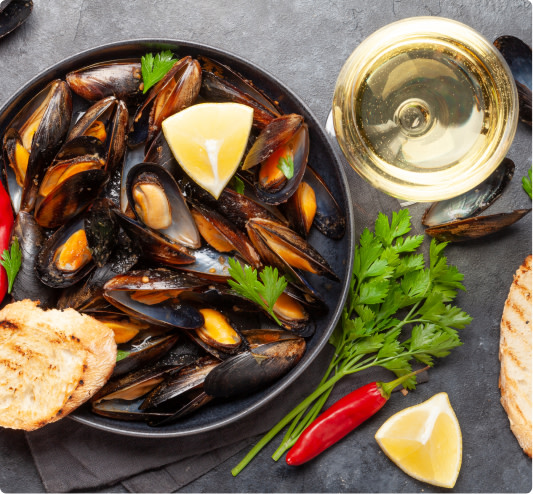
Poaching relies on moist heat by cooking ingredients in liquid at a very low temperature. A low-and-slow, gentle approach to cooking, it’s often used for more delicate foods like fish and other seafood. Using dry white wine as a poaching liquid provides a subtle flavor that will tone down “fishiness” but won’t overwhelm your overall dish. In this scenario, its acidity will also enhance the seafood’s sweetness.
For Dessert
Yes! You can even use dry white wine to make dessert. In some cakes and pastries, dry white wine can be used to replace a portion of the fat. This lightens and lifts the final product and adds another low-key layer of flavor. Alternatively, if a dessert recipe calls for lemon juice to add brightness or act as a souring agent, dry white wine would be an intriguing replacement.
You could also use dry white wine to macerate fruit for a sauce or filling. Like marinating, this technique involves soaking the ingredients (fruit) in a liquid to soften them, concentrate their flavors and coax out natural juices. Using dry white wine in this application will further enhance the fruits’ flavors by brightening them.
Now that you’re a pro, it’s time to get cooking. Start by checking out our selection of white wines to get your proverbial juices following.

AUTHOR
KELBY, PERSONAL WINE ADVISOR
I found myself in the world of wine a decade ago. I’ve travelled, I’ve tasted, I’ve met some of my wine “rockstars!” I pride myself on being a resource for those seeking their own wine journey.
- WSET – Level 2 Wines & Spirits Certified
Favorite Wine: Beefy Cabs • Aged Malbec • Southern Italian Blends • Portuguese Reds • Châteauneuf- du-Pape (my favorite!)
kelby@wsjwine.com | (203) 523-2159