
When our winemaking friend Brigitte Bourlon of Château Guibeau visited us from Bordeaux, she brought something totally new.
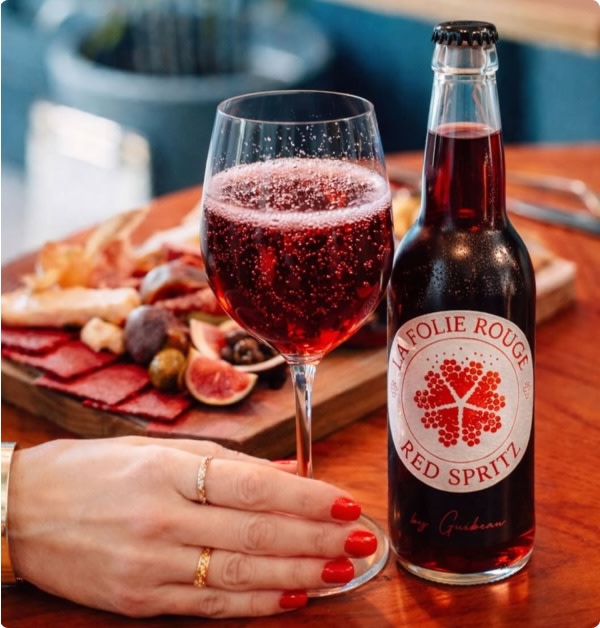
It was a case of her new Folie Rouge, a ready-to-drink wine cocktail that comes in a glass soda bottle with a whimsical label and is currently sold only in France. To our knowledge, this Bordeaux red wine spritz is the first of its kind.
We’ve worked with Brigitte since the inception of WSJ Wine back in 2008 and her classic red, Le Vieux Château Guibeau, encapsulates everything that’s great about small-estate Bordeaux.
It gives wine lovers a taste from Saint-Émilion while having its own unique character derived from the terroir of their family estate, which they farm organically as a labor of love.
Given all the efforts of growing grapes, making wine and bottling it, why did Brigitte create a new wine cocktail?
According to her, it was serendipity.
The fresh cocktail was concocted when her children and their cousins (all of legal drinking age) added tonic water to a wine-based aperitif that her father crafts every year. The whole family loved it (her father, begrudgingly).
This bolt of inspiration couldn’t have come at a better time. Bordeaux itself is rapidly changing.
Due to poor market conditions and supply of their wines outstripping demand, estates across the region are facing financial ruin, with many being forced to rip up vines.
But small, family-run estates like Château Guibeau can’t simply rip up vines and replace them with a different agricultural product. Their expertise is in grape growing and winemaking.
Their Bordeaux spritz was such a hit with friends, too, the Bourlons decided to add it as a new product to their range.
Brigitte is hoping Folie Rouge will prove to be a worthy use of their vines. And the early signs are very promising indeed. The slightly sweet, super refreshing drink was praised by Bordeaux critic Jean-Marc Quarin—and the spritz delighted a room full of people, many traditionalists included, at our office that day.

The Bourlon family aren’t the only French producers experimenting with a little sweetness to entice wine drinkers. Last December, French wine law changed to allow producers in appellations to include grape must in their wines under certain conditions, making it easier for them to tinker with sweetness levels (leaving up to 9 grams per liter of residual sugar in the wines).
But will Folie Rouge, or these slightly sweeter ‘dry’ French wines, be able to get people’s attention? Will anyone try it? Will it make a good alternative to California Cabs?
Perhaps the question isn’t will Bordeaux be able to reinvent itself, but will wine drinkers let it?