


What is Sweet Wine?
Sweet wine is wine that has a perceptible amount of residual sugar (RS)—that is, any sugar that remains after a wine has been fermented.
Let me explain a little further…
All wine starts out as naturally sweet grape juice. To become wine, yeast breaks down the juice’s sugars, converting them to alcohol. This process is called fermentation and, typically, it continues until all (or nearly all) of those sugars have been converted.
If the fermentation process is cut short, or if the grapes used to produce the wine have too much natural sugar to be completely consumed by the yeast, some sugar (the RS!) will still be present in the finished product. Make sense?
This means there aren’t any specific wines that are inherently sweet. By nature, Merlot is not sweet, Chardonnay is not sweet, and not even Riesling is sweet, despite any rumors you may have heard (more on that later): A wine’s sweetness depends on the winemaker and their intended style, and sometimes on the region’s traditions or local appellation rules.
Theoretically, the term “sweet wine” can be used for any wine with noticeable RS. (So, yes, you may find a sweet red wine or a sweet white wine in your wine-drinking travels.) However, it’s most often applied to wines in which the RS is a dominant characteristic.
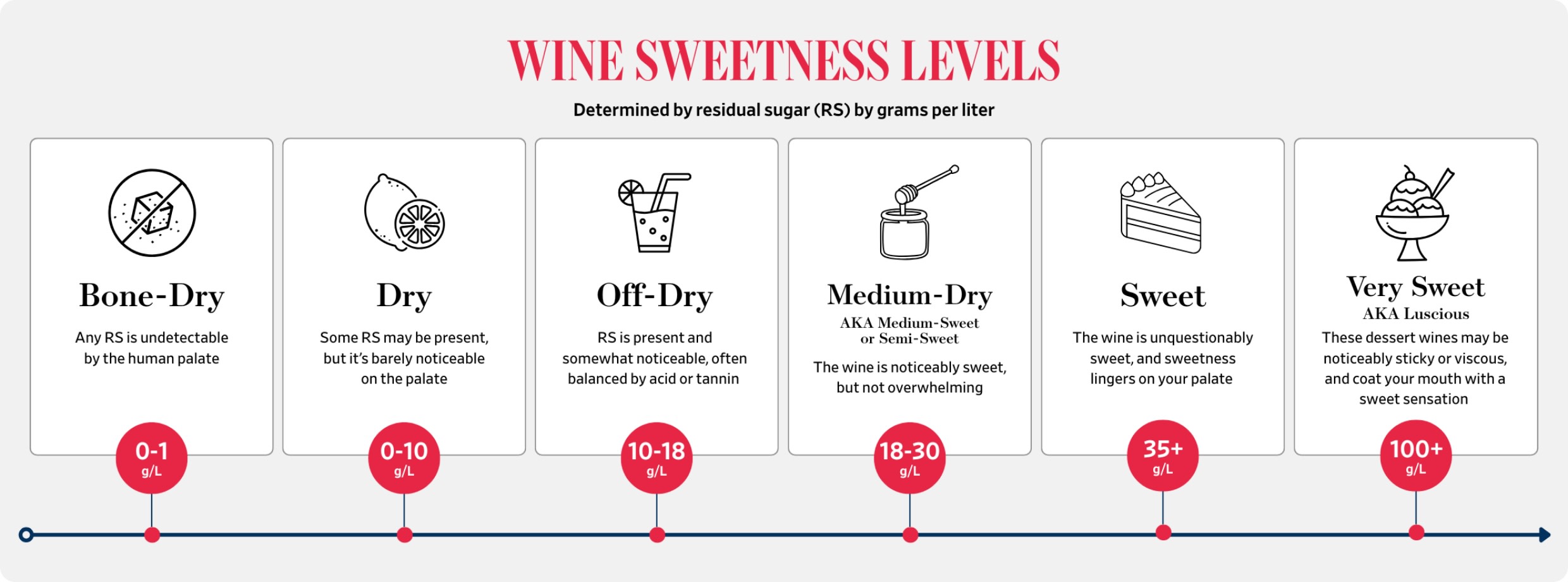
How is Wine Sweetness Measured? Check the Wine Sweetness Chart.
Generally speaking, wines range from bone-dry—or, not sweet at all—to very sweet or luscious, categorized by the amount of sugar grams per liter (g/L) they have. However, in the U.S., no standardized labelling scale exists to measure wine sweetness. To complicate the matter even further, many of these classifications overlap, and because most people cannot detect any sugar below 4 g/L, dry wines can technically contain scant amounts of sugar.
This wine sweetness chart will help you navigate it all:
Why Do Some Wines Taste Sweeter Than Others?
The tricky thing about understanding sweet wine is that some wines may seem sweet, when really, they are dry. This is because while RS is the thing that defines a wine’s sweetness, other characteristics of a wine can influence our perception of it, including acidity, tannins, alcohol level, and flavor or fruitiness.
Acidity is the element that makes wine taste fresh and vibrant. Essential for the overall balance of a wine , it’s a natural foil of sweetness, masking or enhancing its presence. A wine with low acidity but high RS may taste way too sweet, while a wine with high acidity and low RS may seem sharp. A wine with high levels of both will deliver a concentrated yet balanced, super sweet experience.
Tannins can also function as a counterpoint to sweetness. Tannins can make wine seem bitter, the opposite of sweet. They are also felt more than they’re tasted, creating a dry, astringent sensation in the mouth. This means that abundant tannins can hide RS and a high level of RS can soften the feeling of a wine’s tannins.
On the other end of the spectrum, a high alcohol content (or, percent alcohol by volume, ABV) may magnify the perception of sweetness, as alcohol is naturally sweet on the palate. A high ABV can also make a wine seem more viscous or weighty on the palate, another quality our brains affiliate with sweetness.
Fruity flavors can fool us, too. Because we naturally associate fruit qualities with sugar, a wine with robust, ripe or tropical fruit tones can seem sweet, even if there isn’t any RS present. Flavors derived from time in oak like caramel, vanilla, pastry or brioche, can have a similar effect.
Nine Types of Sweet Wine to Know
Sweet wines are produced all over the world, and there are tons of different types of sweet wine, each with its own unique characteristics and varying amounts of RS. Here are some of the most popular—and delicious—sweet wines you may come across.
Moscato
Made from grapes that belong to the Muscat family (though primarily from Muscat Blanc à Petits Grains, also known as Moscato Bianco in Italy), Moscato is best known for the sweet and fragrant, lightly sparkling wines of Asti and Moscato d’Asti in Piedmont, Italy. To make Moscato, the winemaker will chill the wine rapidly to stop fermentation before all the natural sugars have been converted to alcohol. They’ll then filter out any remaining yeast to ensure the final wine maintains sweetness. Because fermentation was halted, Moscato is typically low in alcohol.
Sauternes
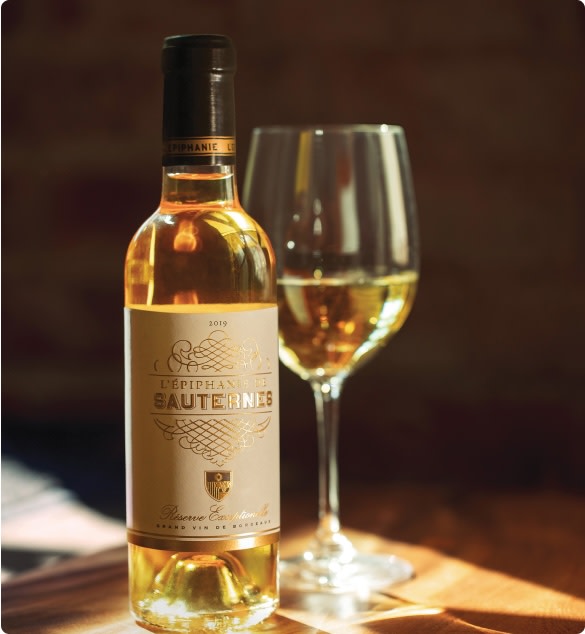
Named after the commune of Sauternes (near the city of Bordeaux, France) in which it is produced, Sauternes is a sweet wine made from Sémillon, Sauvignon Blanc and/or Muscadelle grapes affected by Botrytis cinerea, a naturally occurring fungus known commonly as “noble rot.” The fungus breaks down the cells of grape skin, causing the fruits’ water to evaporate and leaving a very concentrated, sugary juice in its wake. Sauternes is typically rich, honeyed and complex, with vibrant acidity that prevents the wine from being cloying.
Tokaji
Tokaji is a sweet wine produced in the Tokaj region of Hungary. It’s made from Furmint, Hárslevelű and/or Sárga Muskotály (the local version of Muscat Blanc à Petits Grains) grapes. While most types of Tokaji are made from grapes that’ve been affected by noble rot, some are produced from late-harvest grapes picked after the typical harvest season, which allows them to develop richly concentrated sugars. The sweetness level of Tokaji wines is measured on something called the puttonyos scale, named after the baskets (puttonyos) traditionally used to transfer grapes to the cellar. The highest level of sweetness is 6 puttonyos, denoting at least 150 g/L RS.
Ice Wine (Eiswein)
Produced in cool climate regions like Canada, upstate New York, Germany and Austria, ice wine is made, as its name implies, from grapes left to freeze on the vine. The most common grape variety for ice wine is Riesling, but it is also made from Vidal Blanc, Gewürztraminer and other varieties. In these conditions, the grapes’ water content freezes, but their sugars and acids do not. Quickly pressed while still frozen, they create a wine that is intensely sweet but balanced by high acidity, with concentrated flavors of tropical fruit, citrus and honey.
Port
Port is a fortified wine from the Douro Valley of Portugal, produced in a variety of colors and sweetness levels. To make Port, the winemaker will create a base wine the same way they would any regular table wine—harvesting grapes, then pressing and fermenting them—but will halt fermentation part-way through by adding a neutral distilled grape spirit (usually brandy). This increases the ABV and kills the yeasts that have been consuming the wine’s natural sugars. Though available in a range of styles, Port wines are often rich, robust and packed with flavors of ripe citrus, apricot and dark fruits, as well as chocolate, caramel, nuts and sweet spices.
Banyuls
Banyuls is a sweet French wine that is categorized as vin doux naturel, produced in the Banyuls-sur-Mer region of the Roussillon in southern France. Like Port, Banyuls is a fortified wine, to which the winemaker has added a neutral grain spirit to halt fermentation. Though crafted in an immense range of styles, it’s made primarily from Grenache, Grenache Blanc and Grenache Gris grapes (with other local varieties allowed in small amounts), must be aged at least one year and will always have at least 15% ABV. Flavors range from rich with dynamic fruit tones, to chocolatey or coffee-like, to complex and nutty with notes of sweet baking spices.

AUTHOR
STEPHEN, SENIOR PERSONAL WINE ADVISOR
After 30+ years working in Michelin-starred restaurants with famous chefs in Manhattan, I found that I really do love wine—so for the last 10+ years, I’ve worked here, and every day is an adventure!
- WSET – Level 2 Wines & Spirits Certified
- Certified Restaurant Sommelier for 20+ years, achieving two James Beard awards
Favorite Wine: Brunello • Amarone • Barolo • Fine Rioja • Top-End Bordeaux