
Shipping to CT
Red WineWhite WineRosé WineSparkling WineMixed Wine$30+$20-$30$15-$20TrioSixTwelveSpring Top 12 CollectionSpring Top 12 RedsInternational Pinot Noir SamplerPortuguese Reds Taste TourView AllBROWSE ALL MIXED WINE CASESRed Wine White WineRosé WineChampagne & SparklingDessert WineRed BlendWhite BlendArgentinaAustraliaChileFranceItalyNew ZealandPortugalSouth AfricaSpainUSABordeauxBurgundyCaliforniaLoire ValleyMendozaPiedmontRiojaRhôneTuscany and CentralVenetoCabernet SauvignonChardonnayChiantiMalbecMerlotMontepulcianoMoscatoPinot GrigioPinot NoirProseccoRieslingSauvignon BlancSyrah/ShirazZinfandelLow AlcoholAward Winning Red WinesAward Winning White WinesTop Rated Red WinesTop Rated White Wines90 Point WineDry Red WineFine WineBiodynamicOrganic GrapesVeganVegetarianBROWSE ALL WINESBROWSE LATEST OFFERSHappily Ever After WinesClassic Red & White WinesClassic Red WinesPremium Red WinesMother's DayCorporate GiftingFoodiesHost GiftsBirthdayThank YouWeddingBoutique Bubbly SixWine & Cheese Lovers' Gift SetBest-Selling Reds SixBest-Selling Whites SixWine Gift BagsDartington DecanterSlate Cheese BoardRechargeable CorkscrewCrystal Champagne FlutesFrench-Style Steak KnivesBROWSE ALL GIFTSIntro to Wine & Food PairingChardonnay Pairing GuidePairing Wine with LambWine & Cheese PairingsHow to Pair Wine & ChocolateItalian Food and Wine Pairing GuideWine ColorWine Cork vs. Screw CapHow to Hold a Wine GlassCheat Sheet to Wine Btl. SizesPreserve & Store WineTaste Wine like an ExpertBest Dry White Wine for CookingWine for BeginnersChampagne vs. ProseccoSauvignon Blanc GuidePinot Noir Wine GuideBest Non-Alcoholic WineBest Sparkling for MimosasHost a Wine Tasting at HomeBest Wine & Champagne for a Wedding ReceptionCorporate & Business Wine Gift IdeasBROWSE ALL ARTICLESBROWSE ALL WINES
  • Home
  • wine blog
  • wine and food
  • Comprehensive Champagne Food Pairing Guide

Comprehensive Champagne Food Pairing Guide

Champagne food pairings explained, from oysters and fried dishes to cheese, seafood and dessert, with guidance on styles and dosage.

April 15, 2026

By Reanna, Wine Advisor Team Director

Champagne is the most iconic sparkling wine. Its many enviable qualities, from its high natural acidity to its fine effervescence, also make it a fantastic partner for food. The level of sweetness influences how Champagne performs across savory and sweet courses, while its minerality and texture allows it to pair well with a wide range of dishes.

In general, foods with delicate flavors fare better with Blanc de Blancs (“white of whites,” a made from white grapes, i.e. Chardonnay, Pinot Blanc, Pinot Gris, Arbane, and Petit Meslier). On the other hand, Blanc de Noirs (“white of blacks,” made with dark-skinned grapes, i.e. Pinot Noir and Pinot Meunier), Pinot-dominant blends and oak-influenced styles carry greater breadth, making them suited to fuller dishes.

Champagne food pairing is examined here through structure, style and preparation—from oysters and fried dishes to cheese, seafood and dessert.


Appetizers, Starters & Snacks

At the start of a meal, Champagne’s acidity and effervescence come into focus. When considering appetizers that pair with Champagne, focus on salt, fat and texture. Salty foods sharpen the wine’s acidity and fruit, while fried or rich dishes are refreshed by its fine effervescence.

Oysters and Shellfish

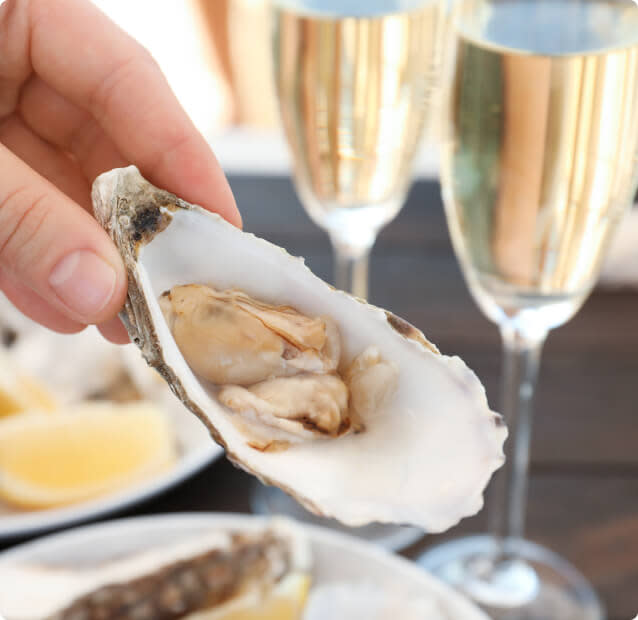
Oysters remain the classic Champagne food pairing, as it clearly demonstrates the wine’s clarity and balance. The high acidity of the wine acts like a squeeze of lemon over the seafood, while its distinct minerality is amplified by the brininess of the shellfish. The crisp effervescence cleanses the palate, preparing it for the next bite. Dry styles like Brut Nature (0-3 grams of residual sugar per liter) or Extra Brut (0-6 grams of residual sugar per liter)  are particularly effective here.

  • Oysters: The briny, saline character of a fresh oyster matches the crisp, mineral-driven profile of leaner, brighter Champagnes.

  • Clams: Served raw on the half shell, their clean, oceanic flavor is enhanced by the wine’s acidity.

  • Shrimp Cocktail: As long as the cocktail sauce isn't too spicy, the firm texture of the shrimp and the clean character of the wine are a great match.

  • Crab: Sweet, delicate crab meat, whether served cold in a salad or warm in a simple crab cake, is elevated by a glass of Champagne.

  • Lobster: A simple steamed lobster tail, served with a side of drawn butter, finds its match in a richer style of Champagne.

  • Mussels: Steamed mussels in a white wine and garlic broth create a seamless connection to a bright Champagne in your glass.

Avoid: Heavy, sweet sauces that clash with the dryness of Brut styles, strong chili heat that can be amplified by the acidity, and thick cream-based seafood sauces (unless you are pouring a richer, oak-influenced Champagne with greater breadth and complexity).
Fried Foods

Champagne finds one of its most compelling expressions alongside fried food. Its fine bubbles and high acidity cut through oil and richness with remarkable efficiency. Each sip keeps every bite tasting as crisp as the first. This is why pairings like fried chicken and Champagne remain enduring benchmarks.

  • Fried Chicken: The salt and fat of the chicken are perfectly balanced by the Champagne’s acidity and bubbles.

  • Tempura: Light and crispy tempura, whether shrimp or vegetable, stays crisp alongside the freshness and effervescence of Champagne.

  • Calamari: A sip of crisp Champagne is like a squeeze of lemon over fried calamari.

  • French Fries: Simple, salty and fatty, French fries are an unexpectedly strong pairing. The saltiness makes the wine’s fruit more expressive.

  • Croquettes: Whether filled with cheese, ham or potato, these fried bites are refreshed by the effervescence of Champagne.

Avoid: Sweet glazes, honey-drizzled fried foods, overly spicy coatings and sticky barbecue sauces; the sugar in these sauces will make a dry Champagne taste thin, bitter and unpleasantly sharp.


Cheeses

Cheese is an excellent choice for Champagne, but the right texture is crucial. The effervescence cuts through creamy, high-fat cheeses, while nutty, aged cheeses can echo the autolytic notes—the toast, brioche or yeasty notes from the wine's time spent aging on lees (leftover yeast cells).

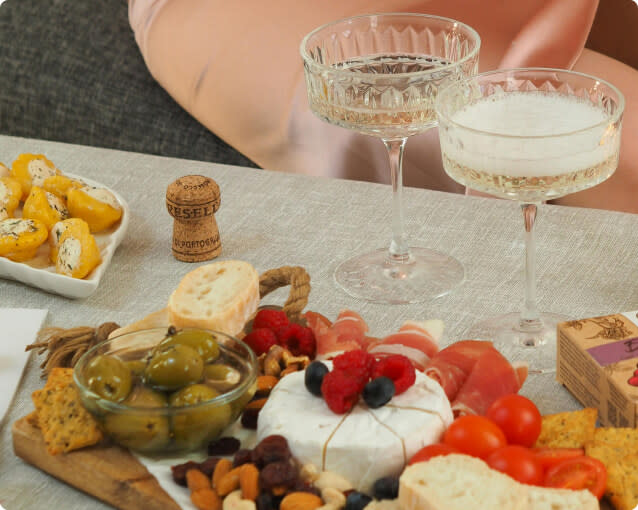
  • Brie: The creamy texture of Brie is lifted by the bubbles, preventing it from feeling too heavy.

  • Camembert: Earthier than Brie, its flavor profile aligns well with the savory notes of many Champagnes.

  • Triple-Cream Cheeses: These high-fat cheeses are where effervescence truly shines, refreshing the palate after each bite.

  • Comté: A hard but not overly sharp cheese with nutty notes that pair beautifully with vintage or oak-influenced Champagne.

  • Gruyère: Similar to Comté, its nutty character is a fantastic bridge to the wine's toasty notes.

  • Parmesan: A small sliver of aged Parmesan can be a wonderful, salty counterpoint, but avoid overly sharp versions.

Avoid: Aggressive washed-rind cheeses and extremely pungent blue cheeses, which can overwhelm the wine's elegance. Very sharp aged cheeses can also distort the balance, making the Champagne feel flat.

Charcuterie and Light Savory Bites

The saltiness of cured meats sharpens the perception of acidity and fruit flavors in Champagne, while the moderate fat content is refreshed by the bubbles. Lighter, leaner meats tend to preserve the wine's finesse.

  • Prosciutto: The delicate, salty flavor and melting fat are a perfect match.

  • Smoked Salmon: The light smokiness complements the brioche notes of the wine, while the fat is cut by the acidity.

  • Mild Pâté: A smooth chicken liver pâté works well, as Champagne’s acidity and bubbles prevent its richness from feeling heavy.

  • Toasted Almonds: Their nutty flavor echoes the autolytic character of the wine.

  • Light Salumi: Look for cured meats that are not heavily spiced, such as a simple Italian salami.

Avoid: Avoid sugary glazes, heavy barbecue flavors and excessive chili heat, which can overwhelm a dry Brut Champagne.

Spicy cuisines require careful attention to sweetness level, as heat amplifies acidity and dryness and can make Brut styles feel sharper than intended. Off-dry styles such as Extra Dry (12-17 residual sugar per liter) or Demi-Sec (32-50 residual sugar per liter) softens the impact of chili and aromatic spice.


Entrées & Main Courses

Because of its high acidity, structural tension and depth from lees aging, Champagne has the capacity to pair with full main courses. Lighter styles like Blanc de Blancs favor delicate seafood and cream-based dishes, while Blanc de Noirs carry enough structure for darker poultry and even lighter red meats. Vintage and oak-influenced Champagnes, with broader texture and deeper character, are suited to more robust dishes.

Poultry

Champagne is a fantastic companion for poultry. Its acidity cuts through rich gravy, while the effervescence lifts the fat from crispy skin.

  • Roast Chicken: A simple herb-roasted chicken is a versatile pairing for almost any Brut Champagne.

  • Turkey with Gravy: The sparkling wine’s acidity counterbalances the richness of the gravy while keeping the lean meat lively.

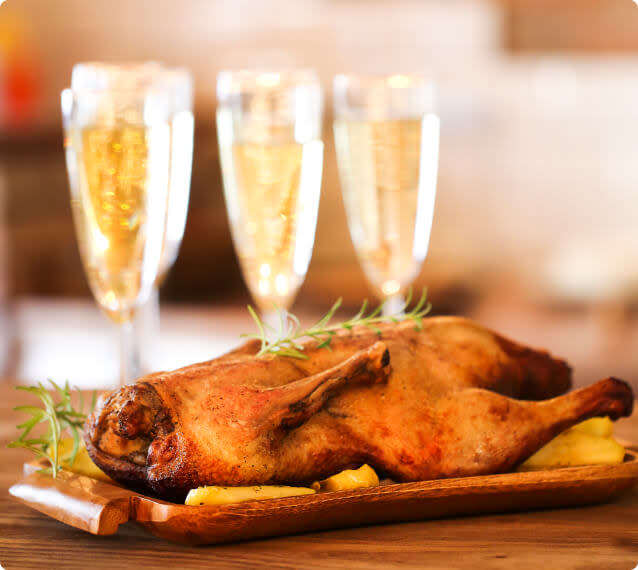
  • Duck: The high fat content of duck is offset by Champagne’s freshness.

  • Chicken in a Cream Sauce: The creamy sauce meets the sparkling wine’s mousse of bubbles, creating cohesion on the palate.

Avoid: Sweet glazes, very spicy sauces and sticky barbecue poultry, all of which will clash with a dry Champagne’s profile.
Seafood Mains

Champagne’s versatility makes it a great pick for more substantial seafood dishes. Butter and cream sauces are effective partners, as the wine’s acidity prevents them from feeling heavy.

  • Lobster with Butter: A richer Champagne can stand up to the natural sweetness of lobster.

  • Grilled Salmon: The smokiness from the grill is complemented by the toasty notes of an oak-influenced Champagne.

  • Seared Scallops: Their sweet flavor and creamy texture are sharpened by Champagne’s zesty finish.

  • Baked Fish with Lemon and Herbs: A simple, clean preparation that lets a crisp Blanc de Blancs or lighter Champagne shine.

Avoid: Tomato-heavy seafood stews (unless paired with a high-acid Blanc de Blancs), sweet sauces and excess chili.

Vegetarian and Cream-Based Dishes

Creamy and earthy vegetarian dishes go great with Champagne. The mousse of bubbles aligns with the texture of cream-based sauces, while its acidity keeps the dish from feeling overwhelming.

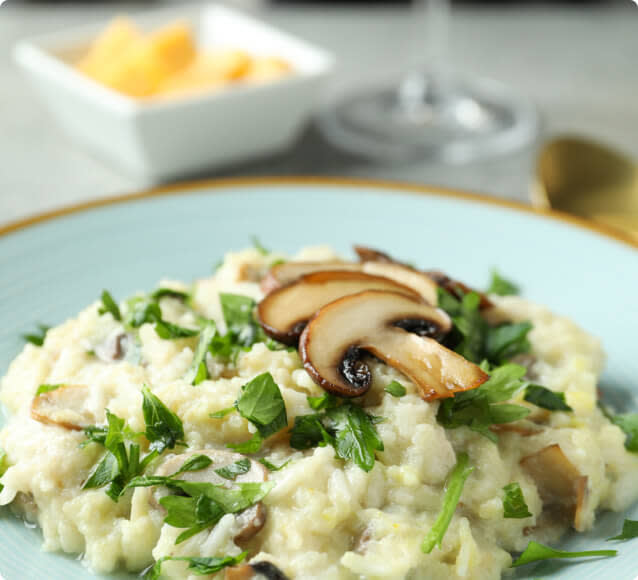
  • Mushroom Risotto: Richer styles of Champagne reveal their depth alongside earthy mushroom risotto, where autolytic complexity meets savory richness.

  • Fettuccine Alfredo: The rich, buttery sauce is given definition by the wine’s sharp acidity.

  • Cauliflower Gratin: The nutty, roasted flavor of cauliflower pairs well with the toasty notes in Champagne.

  • Gnocchi with Sage Butter: The roundness of the butter and the savory herb profile create a harmonious pairing.

Avoid: Very sweet vegetable glazes, aggressive tomato sauces and heavy spice.


Desserts and Sweet Pairings

Pairing dessert with Champagne depends almost entirely on the wine's dosage. The fundamental rule? The dessert can’t be sweeter than the Champagne. If it does, the wine can come across as thin and sour. Lightly sweet, high-acid fruit desserts can work with Brut or Extra Dry, whereas Sec and Demi-Sec are more reliable with richer, sweeter desserts.

Fruit-Based Desserts

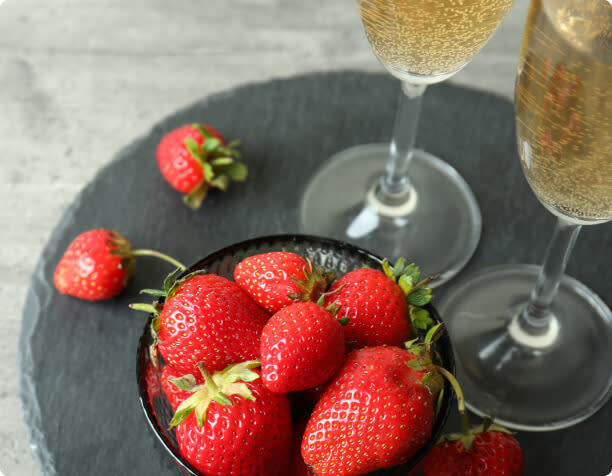
Lightly sweet fruit desserts can work with Brut or Extra Dry styles. The acidity in the fruit mirrors that of the wine, creating a natural harmony.

  • Fresh Berries: A simple bowl of fresh strawberries or raspberries complements a Champagne rosé beautifully.

  • Lemon Tart: The tart’s high acidity works well with a Brut Champagne.

  • Fruit Sorbet: A tart sorbet, like raspberry or lemon, is refreshing alongside the wine.

  • Poached Pears: Pears poached in a lightly sweetened syrup align well with Extra Dry styles.

Avoid: Syrupy toppings, caramel-heavy desserts and high-sugar pastries, which will overwhelm a dry wine.
Chocolate and Sweet Pairings

Chocolate can be a challenging pairing. The bitterness in dark chocolate can clash with the acidity in Champagne. As a general rule, the sweeter the Champagne, the better it can handle chocolate.

  • White Chocolate: The creamy, less bitter profile of white chocolate works best with a Sec or Demi-Sec Champagne.

  • Lightly Sweetened Chocolate Mousse: A mousse with low-sugar content can work with a fuller Extra Dry style.

  • Chocolate-Covered Strawberries: This pairing works best with an off-dry (slightly sweet) style.

Avoid: Pairing milk chocolate or dark chocolate with Brut Champagne. The combination often brings out unpleasant metallic notes in the wine.


Champagne Problems, Solved

Pairing Champagne begins with structure—its acidity, effervescence and sweetness level call for foods with enough salt, fat and depth to stand alongside them. Briny shellfish, crisp fried dishes, creamy cheeses and carefully prepared mains all reveal a different side of the wine. With sweetness and spice held in check, Champagne moves confidently from aperitif to centerpiece. When Champagne is paired thoughtfully, precision defines the experience.

Champagne is best served well chilled but not ice-cold, generally between 45–50°F depending on style.

Explore our Champagne collection to find a bottle suited to your table, or learn more about how Champagne differs from other sparkling wines in our Champagne vs. Prosecco guide.

AUTHOR

REANNA , WINE ADVISOR TEAM DIRECTOR

Originally from England, yet born in India, now living in the States, I have had a rather colorful life—with most of it being in all the shades, pigments, perfumes & plethoras of wonderful wine.

  • WSET – Level 3 Wines & Spirits Certified
  • Sake Level 1 Certified

Favorite Wine: Oaked Sauvignon Blanc • Aged Sémillon • Spicy Shiraz/Syrah • Tuesday night Etna Rosso • Vintage Champagne!

reanna@wsjwine.com | (203) 523-2159