


What Does “Dry Wine” Mean?
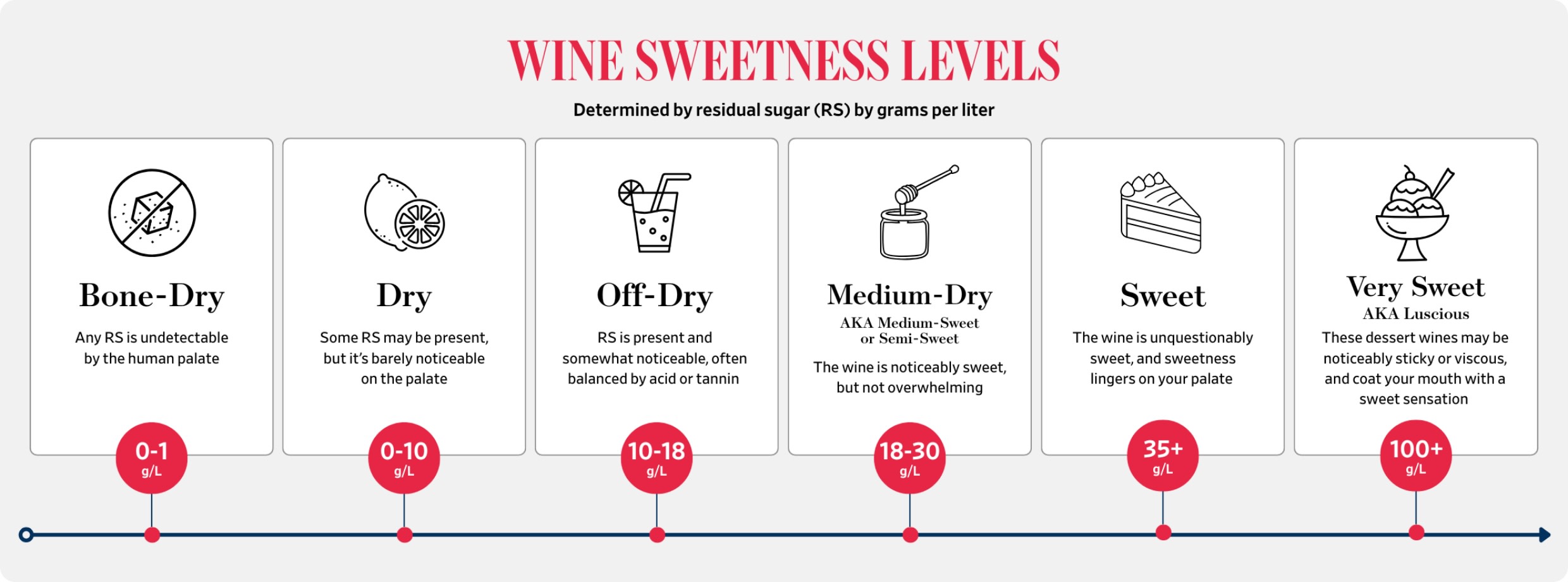
The term “dry wine” may seem counterintuitive—after all, wine is a liquid. So, what is dry wine? Dryness refers to the wine’s sugar levels. Dry wine contains little to no residual sugar, which remains after a wine has undergone fermentation.
Since it is made from grapes, wine starts out as naturally sweet grape juice. During fermentation, yeast breaks down the juice’s sugars and converts them to alcohol. The longer the juice ferments, the more sugars are converted and the less sweet the wine will taste.
Most winemakers continue fermentation until nearly all the sugars have been converted. So, unsurprisingly, dry wine is far more common than sweet wine. While the U.S. does not have official regulations for labeling wine dryness, dry wine typically has 0-10 grams of residual sugar per liter, with “bone dry” (the driest style) having 0-1 g/L.
What Does Dry Wine Taste Like?
Since most people cannot detect sugar below 4 g/L, dry wine rarely tastes sweet. As the name suggests, dry wine can even taste “dry” due to its tannins.
Tannins are natural compounds in grape skins, seeds, stems and oak. When grapes are crushed, or wine is aged in oak, trace amounts of tannins end up in the wine. Tannins can make a wine taste pleasantly bitter (think of your morning cup of coffee) or leave a dry sensation on your tongue. Since sugars mask tannins, dry wine has more “tannic” characteristics than its sweet counterparts.
Though wine dryness is defined by sugar levels, other factors can affect whether a wine tastes dry—including acidity, alcohol, body and flavor.
Acidity gives wine its vibrance and is a natural counterpoint to sweetness. So, if a dry wine has high acidity, it can taste sharp or lip puckering. On the other hand, if a sweet wine has high acidity, it may taste “dry” despite having higher sugar content.
Alcohol is naturally sweet, so a dry wine with a higher percent alcohol by volume (ABV) may taste sweeter than one with a low ABV. Since alcohol is more viscous than water, a high ABV of 14% or more can increase a wine’s body (its texture or weight), making it seem fuller, and therefore, sweeter.
Finally, there’s flavor. Since we associate fruity flavors with sweetness, a dry wine that is bursting with fruit notes may seem sweeter, even if it has little or no sugar. Likewise, secondary flavors from oak aging (think caramel, vanilla or brioche) or tertiary flavors from years in bottle (such as dried fruits or honey) can make a dry wine taste sweeter.
Common Types of Dry Wine
Now that you’re briefed on the style, what is a dry wine that you’ll see in store or online? The options are practically endless.
Since dryness is determined by the winemaking process, any wine can be dry—whether red, white or rosé, still or sparkling. That said, certain grape varieties and regions nearly always indicate a dry wine. Here are some of the most common:
Dry Red Wine
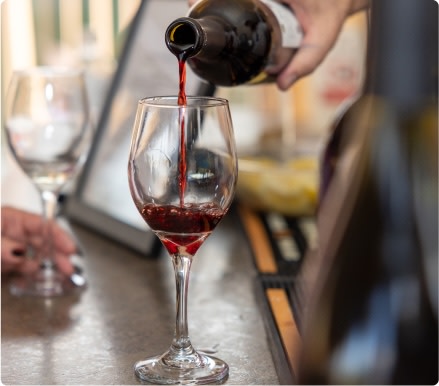
- Cabernet Sauvignon is the world’s most popular grape variety, with thick skins that yield high tannins in the wines. It is one of the main grapes in the fine dry red wines of the Napa Valley and Bordeaux.
- Merlot, another great red grape of Bordeaux, produces wines with rich red fruit and plum flavors, medium- to -full body and velvety tannins.
- Pinot Noir, the star red grape of Burgundy, yields lighter wines with ripe red-fruit flavors, vibrant acidity and gentler tannins.
- Malbec originally hails from France, but today, it’s a major star in Argentina. The wines are characterized by intense dark-fruit flavors, fuller body, structured tannins and a long, dry finish.
- Sangiovese is mainly grown in Italy, yielding wines with tart red berry flavors, fresh acidity and dry tannins.
- Tempranillo originally comes from Spain, with the most famous wines found in the Rioja region, where it is often aged in oak. The aging gives complex spice notes and greater tannins to the wine’s naturally vibrant fruit flavor.
Dry White Wine
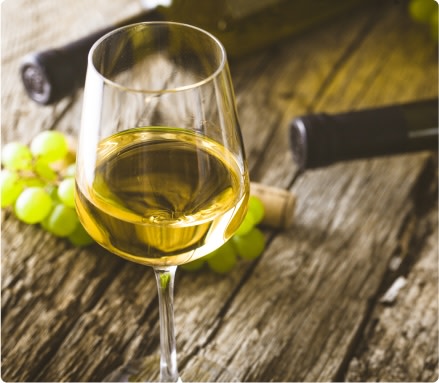
- Sauvignon Blanc is native to France, but excellent bottlings are also found in New Zealand, California and beyond. It produces dry white wines with zippy citrus flavors and exhilarating acidity.
- Chardonnay, another French grape that thrives worldwide, varies based on where it is grown. Cool-climate Chardonnay wines have fresh, citrusy profiles, while warm-climate Chardonnay have rich tropical flavors. When aged in oak, Chardonnay develops a luscious texture and vanilla notes that make it seem sweeter, even though it is a dry wine.
- Pinot Grigio is Italy’s best known white grape, yielding light-bodied wines with crisp citrus flavors. In Alsace, France, Pinot Grigio is called Pinot Gris and has a richer profile, with notes of honey and spice.
- Albariño (in Spain) or Alvarinho (in Portugal) has bright citrus/stone fruit flavors, fresh saline notes, vibrant acidity and a dry finish.
- Riesling isn’t just a sweet wine. This classic white grape, grown largely in Germany and Austria, can produce bone-dry (“trocken”) wines with zesty citrus flavors, distinctive mineral notes and mouthwatering acidity.
Dry Rosé Wine
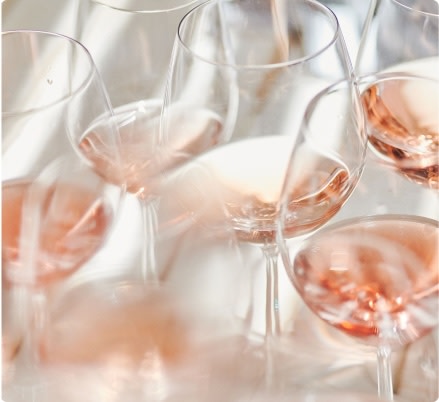
- Provence, in southern France, produces the world’s most iconic rosé wines. Made mostly from red grapes Grenache, Syrah, Cinsault and Mourvèdre, the wines have a beautiful pale color, light body and fresh summer fruit flavors.
- Italian rosato can range from slightly sweet to bone-dry and is made across Italy from a variety of grape varieties, including Sangiovese. Typically, Italian rosato offers ripe red berry and subtle herbal/floral notes.
- Spanish rosado is crafted from Garnacha (Grenache), Tempranillo or Monastrell (Mourvèdre) grapes. The wines usually have fuller bodies compared to other rosé styles, with juicy red-fruit flavors, which can make them seem sweeter than they are, balanced by bright acidity.
- California rosé can be made from Cabernet Sauvignon, Pinot Noir and other red grapes and is typically dry (whereas the state’s famous rosé, “White Zinandel” is usually sweet). The wines typically have a crisp, refreshing style with red fruit, citrus and melon flavors, plus vibrant acidity.
- Saignée rosé is crafted by “bleeding” off liquid from a vat of red wine in the early stages of winemaking, making it darker and bolder than traditional rosé wines, which undergo an intentionally short maceration to maintain their light profiles. Made around the world from a variety of grapes, saignée rosé wines are fruit-rich and unctuous, but often dry.

Dry Sparkling Wine
Unlike still wines, sparkling wines show their dryness levels on the labels. Look out for these terms: Brut Zero/Brut Nature 0-3 g/L, Extra Brut 0-6 g/L and Brut 0-12 g/L.
- Prosecco, Italy’s iconic sparkler, is crafted using the tank method, in which the second fermentation happens in stainless steel tanks. This process preserves the wine’s vibrant pear, apple and lemon flavors, which are balanced by exuberant bubbles and mouthwatering acidity.
- Champagne, France’s famous sparkling wine, is made using the traditional method, in which the wine undergoes a secondary fermentation in the bottle. This process adds notes of toast or brioche to the wine’s fresh white fruit flavors. Champagne also has a creamy mousse (stream of bubbles) and high acidity.
- Crémant is France’s other great bubbly, most commonly hailing from Limoux, the Loire Valley or Alsace. Made in the same way as Champagne, it has a similar flavor profile.
- English Sparkling Wine is crafted using the traditional method as well, with the cooler climate contributing bright acidity and citrusy notes.
- Cava, Spain’s sparkling sensation, is also made using the traditional method. It’s characterized by crisp citrus flavors, subtle brioche notes and slightly gentler acidity than Champagne.

AUTHOR
STEPHEN, SENIOR PERSONAL WINE ADVISOR
After 30+ years working in Michelin-starred restaurants with famous chefs in Manhattan, I found that I really do love wine—so for the last 10+ years, I’ve worked here, and every day is an adventure!
- WSET – Level 2 Wines & Spirits Certified
- Certified Restaurant Sommelier for 20+ years, achieving two James Beard awards
Favorite Wine: Brunello • Amarone • Barolo • Fine Rioja • Top-End Bordeaux