- Home
- wine blog
- types of wine
- A Guide to Super Tuscan Wine

Super Tuscans are one of the great rule-breaking success stories in wine. These bold, balanced reds came from Tuscan winemakers who wanted more freedom—and ended up creating some of the country’s most admired wines. If you enjoy expressive red blends, Super Tuscans are well worth getting to know.
What is Super Tuscan Wine?
Super Tuscan is an unofficial term for high-quality red wine made in Tuscany that doesn’t follow the region’s traditional winemaking rules. Many Super Tuscan wines blend Tuscany’s native Sangiovese with international grapes (grown locally) such as Cabernet Sauvignon, Merlot, Cabernet Franc or Syrah.
Unlike Chianti, Brunello di Montalcino or Vino Nobile di Montepulciano, “Super Tuscan” is not a legal wine classification. There’s no single rulebook for the grapes, aging, or production. Instead, the name was created to categorize ambitious Tuscan reds that became famous for pushing conventions.
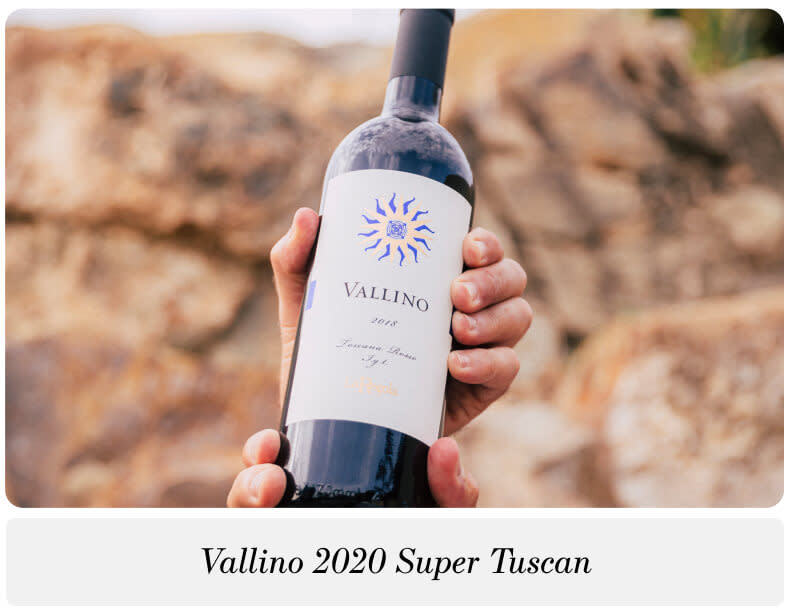
Many Super Tuscan wines are labeled Toscana IGT, though some Super Tuscan-style wines now sit within official DOC classifications, most famously Bolgheri DOC.
Why is it called Super Tuscan?
The name “Super Tuscan” became popular in the 1970s and 1980s, when a new wave of Tuscan producers began making premium wines outside the strict DOC and DOCG rules.
Those regulations control key details, including which grapes can be used and how the wine must be made. By stepping outside the Denominazione di Origine Controllata (DOC) and Denominazione di Origine Controllata e Garantita (DOCG) system, producers gained more freedom to blend varieties and experiment with winemaking styles, even though the wines were initially classified under lower categories at the time.
Back then, Chianti rules were more restrictive than they are today. Producers couldn’t always make the wines they wanted, especially if they wished to use international grapes or make a wine entirely from Sangiovese. Some chose to release their wines under the lower Vino da Tavola classification, even though the wines themselves were anything but basic.
The “super” part came from their quality, ambition and growing international reputation. These wines proved that Tuscany could produce reds with the depth, structure and aging potential of the world’s most respected fine wines.
When Was the First Super Tuscan Made?
Sassicaia is widely regarded as the wine that started the Super Tuscan movement. It was created by Tenuta San Guido in Bolgheri, on the Tuscan coast, using Cabernet Sauvignon and Cabernet Franc.
The wine was first made for private enjoyment before being released commercially in 1971 with the 1968 vintage. At the time, Bolgheri was better known for horses than fine wine, and Cabernet Sauvignon was far from a traditional Tuscan choice.
Other famous early Super Tuscans followed, including Tignanello from Antinori and Vigorello from San Felice. Together, these wines showed that Tuscany’s future didn’t have to be limited by ancient tradition.
What Grapes Are Used in Super Tuscan Wine?
Super Tuscan wine can be made with several red grape varieties. The most common include Sangiovese, Cabernet Sauvignon, Merlot, Cabernet Franc, Syrah and Petit Verdot.
Sangiovese is Tuscany’s signature red grape. It often brings red cherry flavor, freshness, acidity and savory notes. Cabernet Sauvignon and Merlot add darker fruit, body, structure, and softness. Cabernet Franc, Syrah, and Petit Verdot are usually used in smaller amounts, though some producers give them a bigger role.
There’s no required blend. Some Super Tuscans are mostly Sangiovese, some are Bordeaux-style blends and others are made entirely from international grapes.
What Does Super Tuscan Wine Taste Like?
Because producers have so much freedom, Super Tuscan wines can taste quite different from one bottle to the next. It will depend on the grapes, producer, region and aging style. In general, these reds are known for ripe fruit flavors, firm structure and a polished finish.
Super Tuscans led by Sangiovese often lean toward bright red fruit, floral lift, savory herbs and a gentle earthiness. They tend to be fresher and more lifted, with bright acidity and medium to full body.
Cabernet- and Merlot-led Super Tuscans are usually deeper and richer. Expect blackcurrant, black cherry, cassis, plum, tobacco, cedar, spice and sometimes a hint of mint or green pepper.
Many Super Tuscan wines are aged in oak, often French oak barriques. This can add notes of vanilla, toast, sweet spice and cedar while helping soften the wine’s tannins.

Super Tuscan vs Chianti: What’s the difference?
Chianti is an official Tuscan wine classification with specific production rules. It is based mainly on Sangiovese and must follow regulations tied to the Chianti region.
The Super Tuscan category is different because it is not an official classification. A Super Tuscan wine may include Sangiovese, but it can also include international grapes such as Cabernet Sauvignon or Merlot. Super Tuscans can come from anywhere in Tuscany, including Chianti.
Think of Chianti as a wine defined by regional rules. Super Tuscans are modern inventions directed by the producer’s freedom to make something different.
How to Identify a Super Tuscan Wine
A Super Tuscan wine won’t say “Super Tuscan” as an official classification on the label. Instead, look for a few clues.
Many bottles are labeled Toscana IGT, a classification which gives producers more flexibility than traditional DOC or DOCG rules. You may also see wines from areas such as Bolgheri DOC or Maremma Toscana DOC, where the regulations now allow styles that overlap with the Super Tuscan category.
Another clue is the name. Many famous Super Tuscans are known by proprietary names rather than simply the grape or region. Sassicaia, Tignanello, Ornellaia, Solaia, Masseto, and Le Pergole Torte are well-known examples.
Super Tuscans aren’t limited to the famous, expensive examples above. There are approachable options too, especially if you look for Toscana IGT reds that blend Sangiovese with Cabernet Sauvignon or Merlot.
Famous Super Tuscan Wines To Know
A few names helped define the Super Tuscan story.
Sassicaia is one of the most famous, known for its Bordeaux-inspired style and its role in putting Bolgheri on the fine wine map.
Tignanello, from Antinori, is another landmark wine. It helped show what modern Tuscan red could become by combining Sangiovese with non-traditional varieties.
Ornellaia is a powerful red from Bolgheri made in a Bordeaux-influenced style, while Masseto is a celebrated Merlot from the same area. Solaia, Le Pergole Torte, Vigorello and Luce are also important names to know.
You don’t need to start with the most expensive bottles. If you’re new to Super Tuscan wine, a Toscana IGT red with Sangiovese, Cabernet Sauvignon or Merlot is a great place to begin.
What Foods Pair Well with Super Tuscan Wine?
Super Tuscan wines are made for rich, savory food. Their acidity and tannins, as well as concentrated fruit flavors, make them especially good with Italian dishes, grilled meats and hard cheeses.
A Sangiovese-led Super Tuscan pairs beautifully with tomato-based pasta, pizza, roasted vegetables, pork and herb-seasoned dishes. The wine’s acidity works well with tomato sauce and cuts through richer ingredients.
A Cabernet- or Merlot-led Super Tuscan is a better match for grilled steak, lamb, game, braised beef, mushrooms and aged cheeses. The darker fruit and firmer tannins stand up well to deeper, more robust flavors.
Do Super Tuscan Wines Age Well?
Many Super Tuscan wines age very well, especially premium bottles made with Sangiovese, Cabernet Sauvignon or Merlot. When grown under ideal conditions, these grape varities often have the acidity and tannins needed for long-term aging.
As the wine develops, the palate can become softer and more layered, while notes of leather, tobacco, dried herbs, spice and earth may appear. High-end Super Tuscans can often be cellared for a decade or more, though aging potential depends on the producer, vintage and wine style.
More affordable Super Tuscan reds are often best enjoyed younger, while their fruit is still fresh and expressive.

How to Serve Super Tuscan Wine
Serve Super Tuscan wine slightly below room temperature, ideally around 60-65°F. If the bottle has been stored in a cool cellar or wine fridge, let it warm slightly before serving.
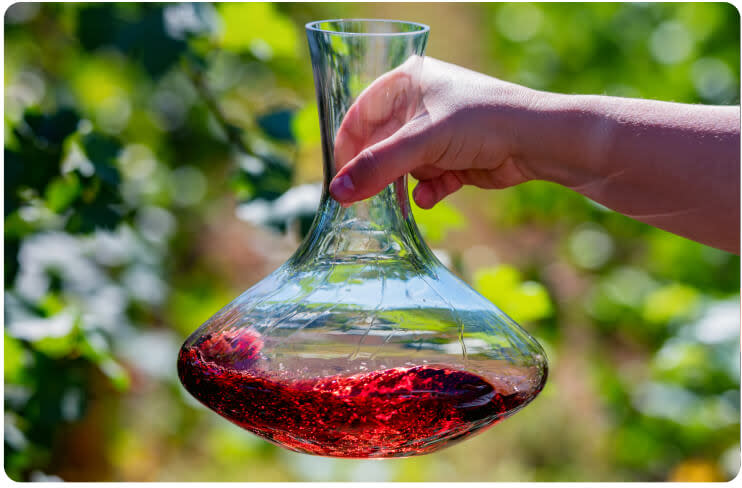
For a young bottle with firm tannins, open it early and let it breathe in a decanter for about an hour or two. Older bottles should be handled more gently and may need only a short decant to remove sediment.
After opening, keep the bottle sealed and chilled, then finish it soon while the fruit and aromas are still lively.
Explore Italian Reds with WSJ Wine
Super Tuscan wine is a brilliant example of what happens when tradition meets bold thinking. Explore more expressive Italian wines with WSJ Wine, including distinctive reds full of depth and character.
WSJ Wine Recommends

AUTHOR
KELBY, PERSONAL WINE ADVISOR
I found myself in the world of wine a decade ago. I’ve travelled, I’ve tasted, I’ve met some of my wine “rockstars!” I pride myself on being a resource for those seeking their own wine journey.
- WSET – Level 2 Wines & Spirits Certified
Favorite Wine: Beefy Cabs • Aged Malbec • Southern Italian Blends • Portuguese Reds • Châteauneuf- du-Pape (my favorite!)
kelby@wsjwine.com | (203) 523-2159